Use case · Robotics

Haptic control of robot hands — from anywhere.

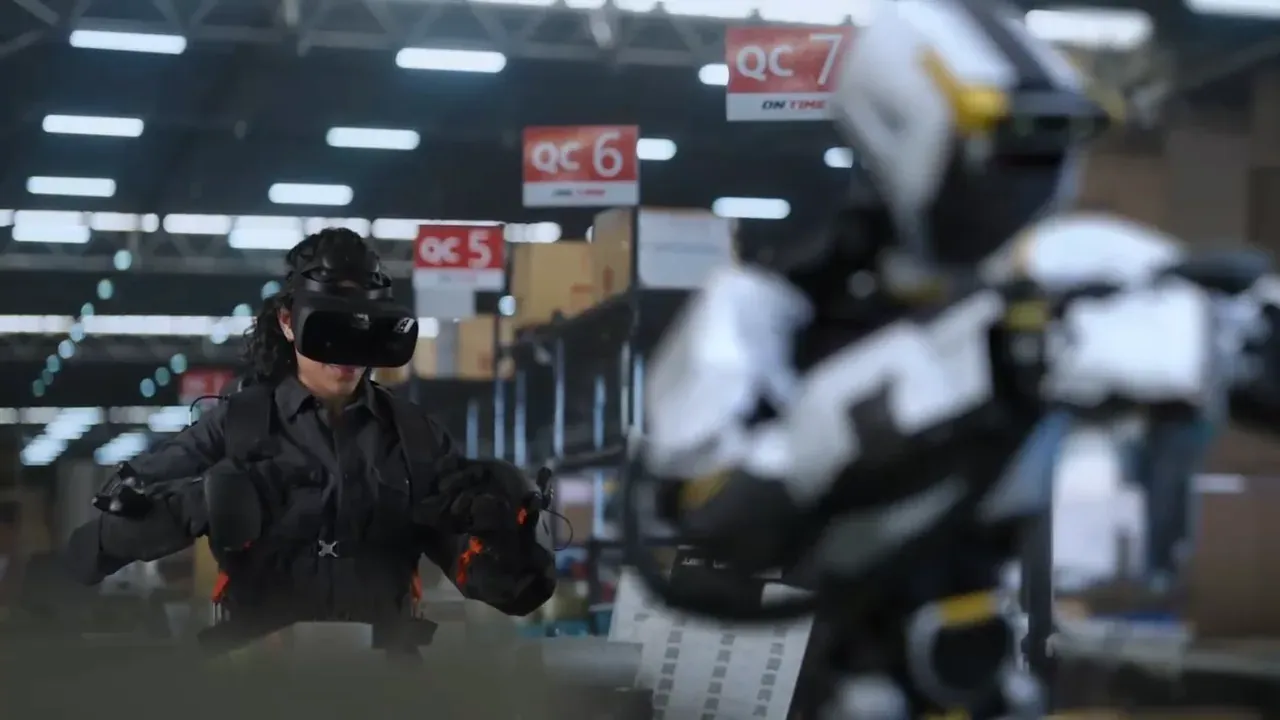
Pilots wear HaptX Gloves to drive robotic hands, grippers and arms at any distance — and feel what the robot feels. Continuous, natural interaction for teleoperation and for teaching robots new skills.

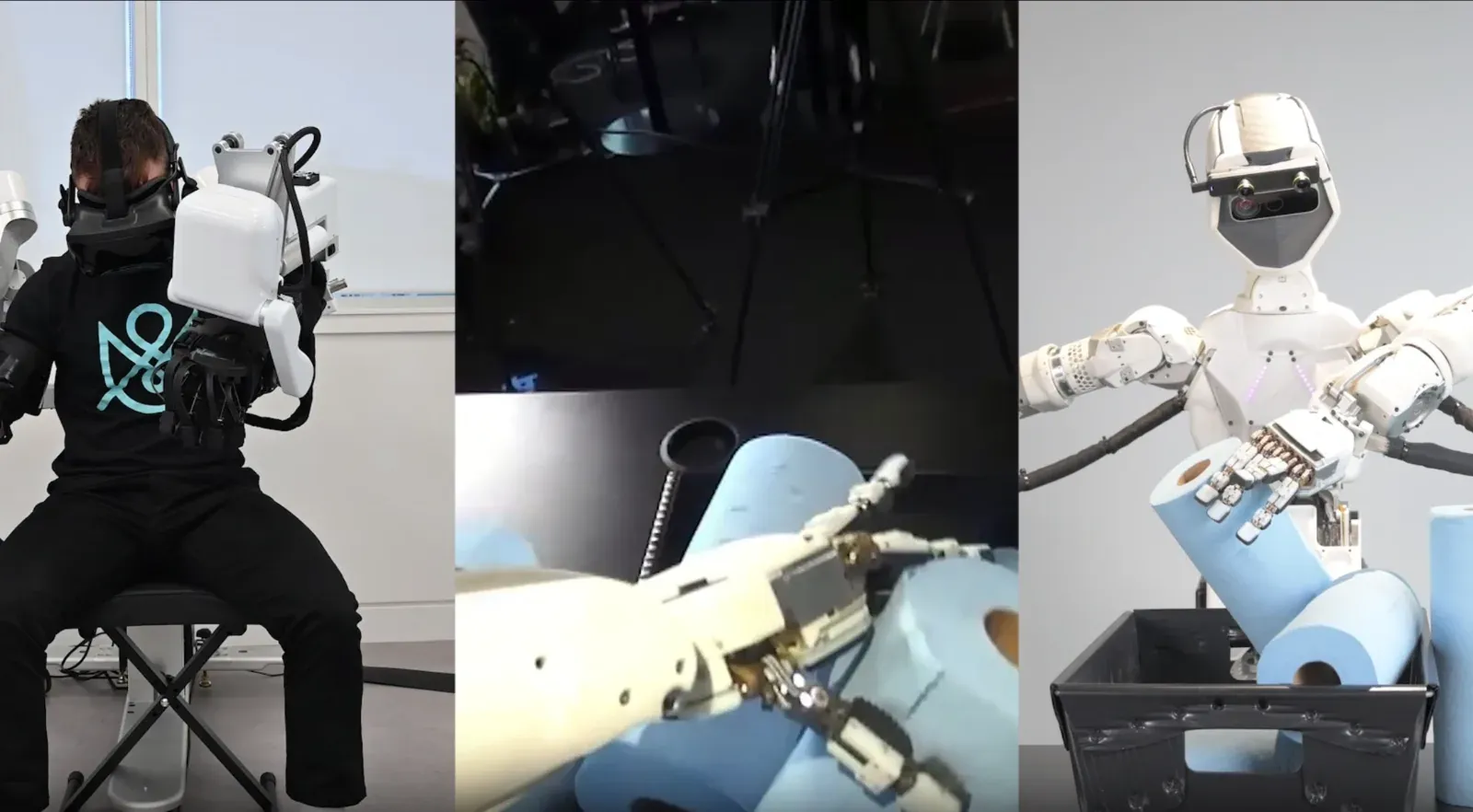
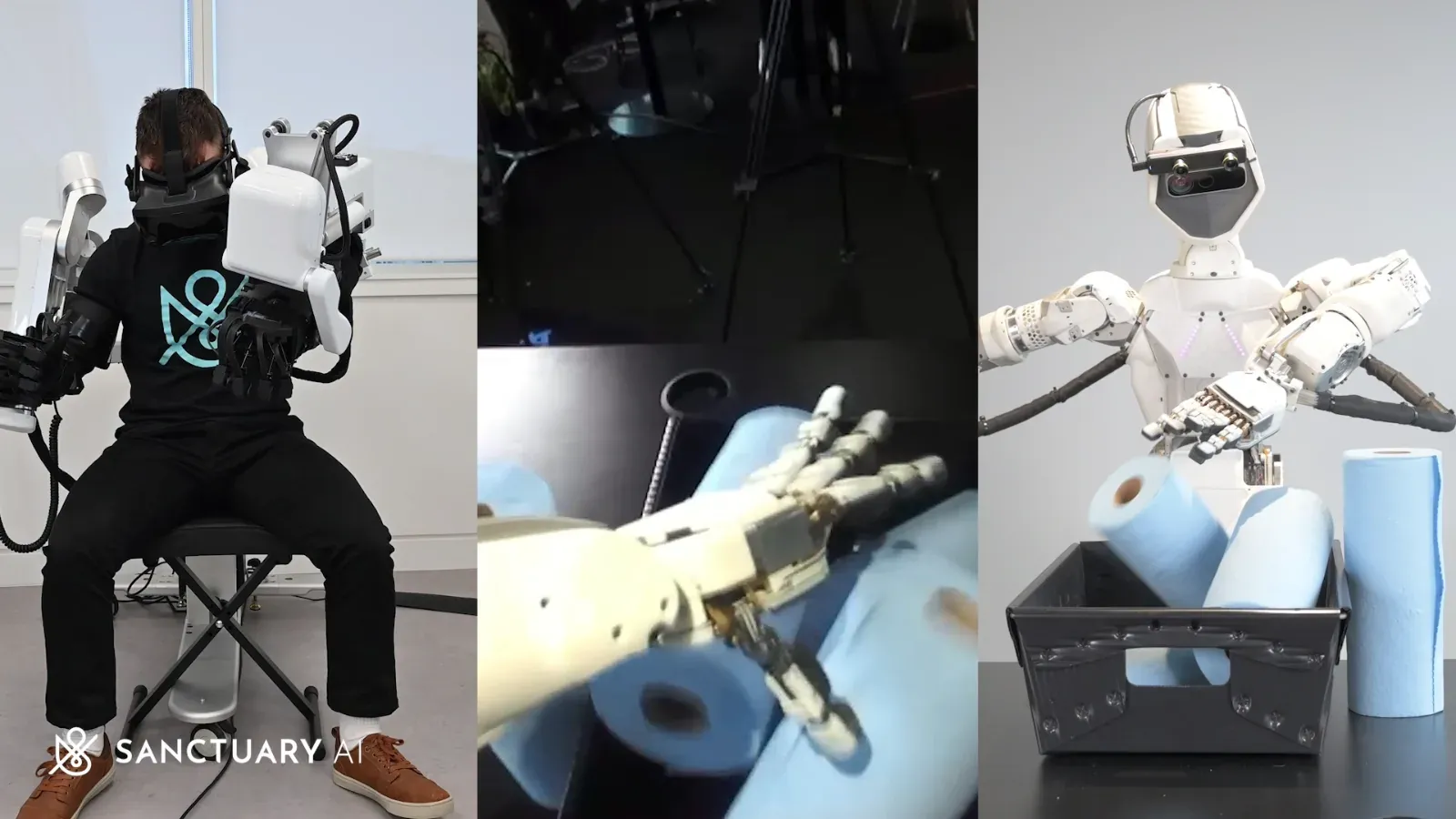
Sanctuary AI: an operator wearing HaptX Gloves (left) pilots a humanoid robot (right).

Human in the loop

Two signals, travelling in opposite directions.

In teleoperation the robot does not decide what to do — a person does. HaptX Gloves carry the person’s hand motion out, and the robot’s touch back.

Tactile feedback to the operator depends on the robot being equipped with suitable sensors and integration — available through the HaptX SDK’s C++ API and ROS node (ROS 1 and ROS 2).

Worldwide, world-class human-robot interaction

Robotics work built on HaptX.

Sanctuary AI teleoperation footage: an operator in HaptX Gloves controls a humanoid robot that handles paper towel rolls.

Pilots who can feel what their humanoid robot handles.

Sanctuary AI, on a mission to create human-like intelligence in general-purpose robots for enterprise, selected HaptX Gloves so the human operators who pilot its humanoid robot can feel the objects being handled.

Customer
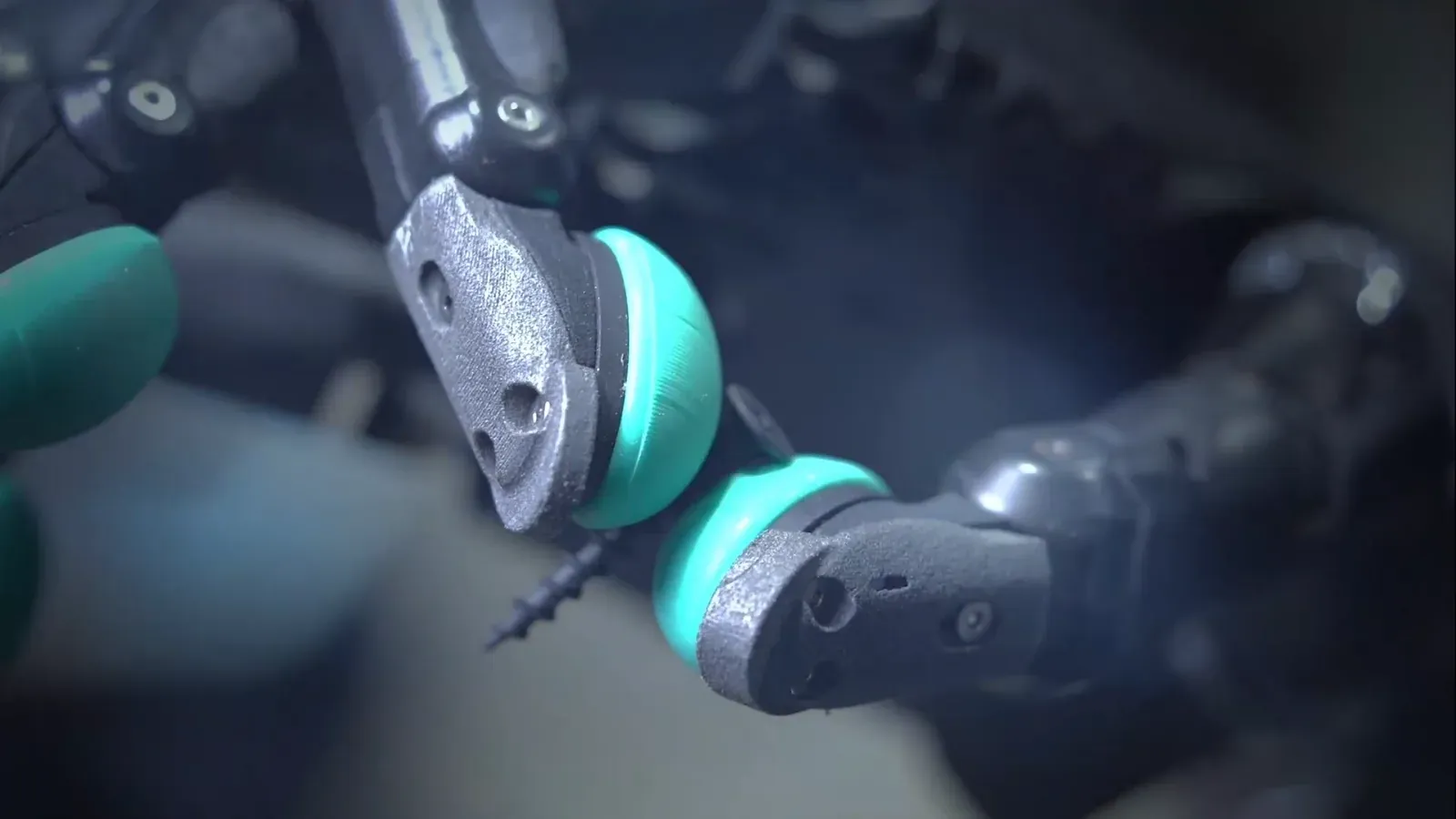
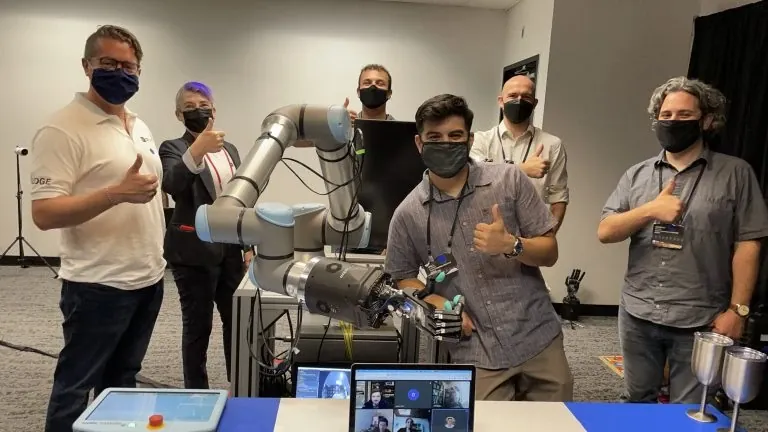
The Tactile Telerobot: dexterous Shadow Robot hands controlled by operators wearing HaptX Gloves, with tactile sensors feeding touch back.

A remote hand that sends touch home.

HaptX has conducted human-robot interaction research since 2018. In 2019 HaptX Gloves were first used to control the Tactile Telerobot, co-developed with Shadow Robot in a consortium funded by All Nippon Airways. Its humanoid end-effectors carry tactile sensors that transmit haptic data to the operator’s hand with high accuracy, high speed and low latency.

The system reached the finals of the $10 million ANA Avatar XPRIZE.

Proof of concept
The Tactile Telerobot team with the robot system, at the ANA Avatar XPRIZE semifinals.
Team and Tactile Telerobot at the ANA Avatar XPRIZE semifinals.

AI training

Teach robots by showing them.

One reason to build humanoid robots is to transfer human manual skills. For imitation training, operators wearing HaptX Gloves G1 demonstrate a task precisely and repeatedly through the robot; those demonstrations become training data for the robot’s learning system.

The gloves capture the human demonstration and return touch to the operator during it — the learning itself happens in the robotics team’s own AI stack. HaptX’s ROS node supports teleoperation, machine learning and computer-vision workflows.

  • Natural interactionOperators intuitively control robotic hands with little to no training.
  • Realistic haptic feedbackTactile and force feedback give the operator critical control information.
  • High dexterityCapture of the full range of hand motion.
  • Precise controlSub-millimeter motion-capture accuracy.
  • Remote operationControl a robot from anywhere in the world.
  • Many industriesHealthcare, energy, safety, manufacturing and defense — wherever tasks are hazardous or costly and repetitive.

Weirdly natural… That is really impressive. The tactile feedback is tremendous.

Jeff BezosFounder and Executive Chairman, Amazon

The gold standard for haptics in VR.

Anshel SagPrincipal Analyst, Mobility & VR

Start a conversation

Let’s discuss your robotics project.

Tell us about your robot, its end effectors and sensors, and what your operators need to feel. We can give you a clearer picture of the configuration you need.