Case study · Training · June 2024
A multi-user virtual glovebox for hazardous-material handling.
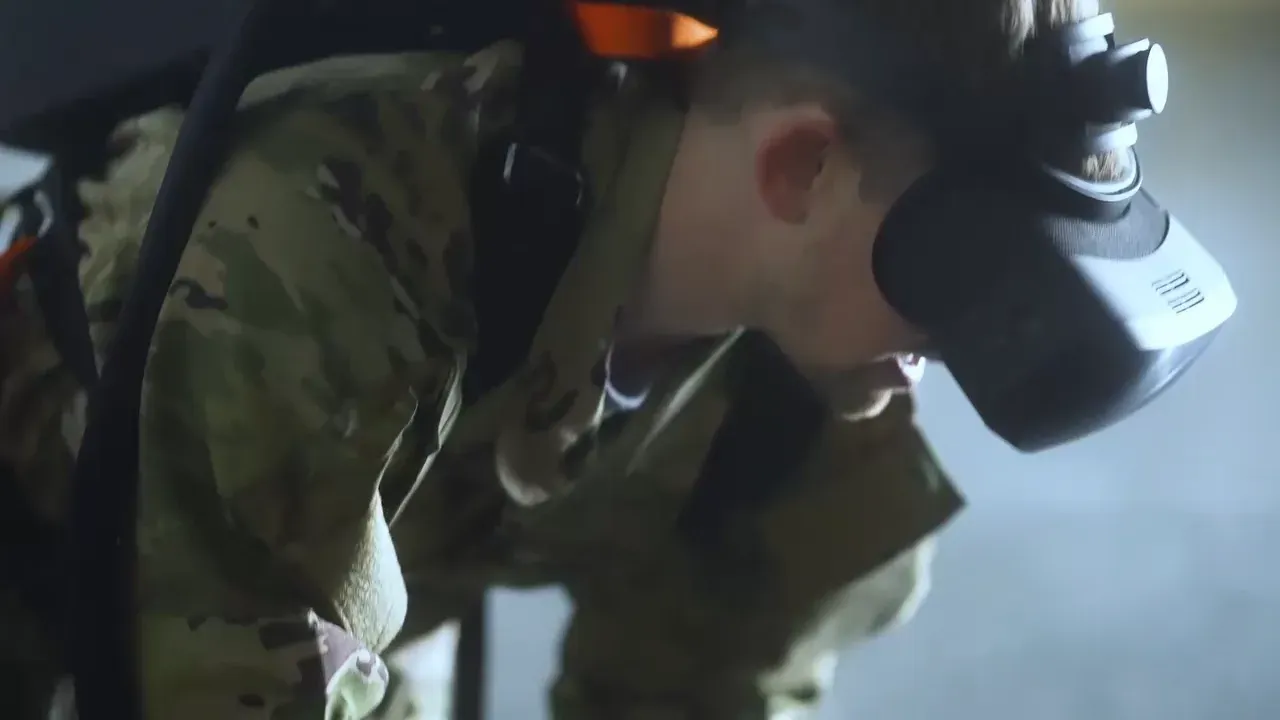
Y-12 National Security Complex prototyped a groundbreaking worker-training system that combines virtual reality with multi-user haptics.
The situation
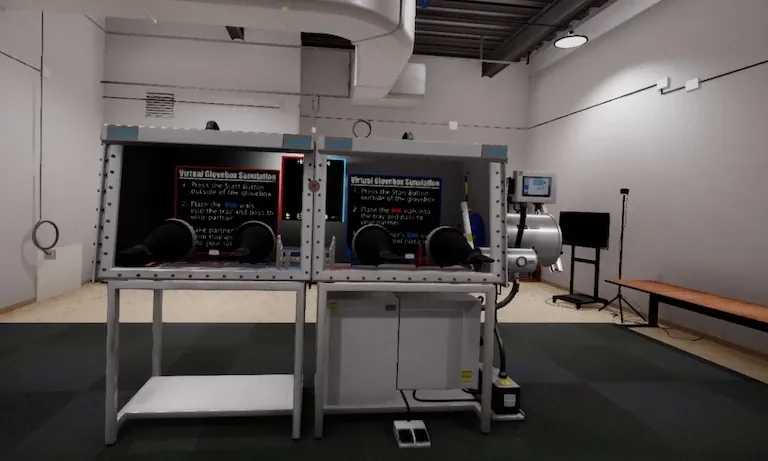
Y-12 plays a vital role for the U.S. Department of Energy, and uses gloveboxes to handle dangerous materials: sealed containment units with windows and ports where workers wear protective, arm-length gloves. Gloveboxes come in varied sizes and support many processes, so training is critical — and a key challenge is replicating the realism and strain of the work without any of the hazards.
The goal
ORETTC set out to prototype a virtual glovebox training simulator in which users could handle and test dangerous materials, both independently and in multi-user sessions for collaborative material handling — and to evaluate the educational value of haptic feedback on training time for physical glovebox operations.
The problem to address
Glovebox training requires manual dexterity and procedural and muscle memory, and often two operators passing materials to each other. Until recently, no commercial technology supported multi-user haptics within a single virtual environment. Fixed glove ports also cause strain and fatigue over time, which a realistic simulation needs to communicate.
The solution
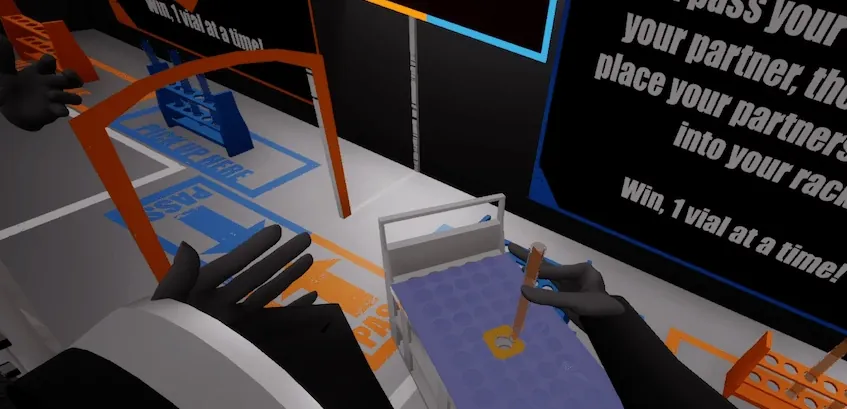
ORETTC Instructional Technology Lead Austin Arnwine, with support from Senior Manager Mary Lin and Director Ashley Stowe, devised a virtual glovebox simulator with HaptX gloves for realistic simulated tactile and force feedback. Through the HaptX SDK, and in collaboration with UCF’s lab, the project achieved multi-user haptics for collaborative scenarios.
The use of HaptX gloves in virtual training environments provides the user with the ability to build muscle memory, both mentally and physically.
Research methods
The study compares three conditions — HaptX Gloves, joystick and a physical glovebox. Participants complete a busy-board familiarization (zipper, buckle, two latches, chain lock, switch) three times per condition, then a glovebox task: moving a canister through the compressed chamber, filling it with a closed vial, closing it with a wrench and returning it.
Results so far
At this early prototype phase, the virtual glovebox is being evaluated for potential deployment, pending favorable results. HaptX and Y-12 have signed an agreement to collaborate on further development of the multi-user glovebox training simulation in support of the U.S. energy sector.
Everything we do at ORETTC funnels technology through an educational lens…